Greg Lee

Greg Lee

Cofounder and CTO, GTM Engine

Greg Lee is Cofounder and CTO of GTM Engine, where he leads the engineering behind the Revenue Data Platform and its AI agents. Before GTM Engine he cofounded Rowsie AI as CTO, building an AI analyst that explains, updates and builds Excel models so business logic can be automated.

Earlier, at Scoop Technologies, he built the original Android app, then backend services for carpool matching and scheduling, and went on to manage a team of five engineers across mobile, backend and data science. He also built Apartment List's Android app, was lead engineer on eight medical device projects at Theranova, including the spinouts Channel Medsystems and Perikinetics, and cofounded Rise Solar, which designed a patented solar home system for off-grid households at half the price of existing systems. Between companies he spent time researching machine learning, from differentiable programming to Bayesian neural networks.

Outside work he serves on the board of American Whitewater, where he led the building of its Android and iOS apps for river descriptions and flow data.

Greg on LinkedIn

Articles by Greg (30)

Marketing LeadersCampaigns & contentProspecting & enrichment

How We Built Campaign Engine: Turning Your CRM Into a Pipeline Machine

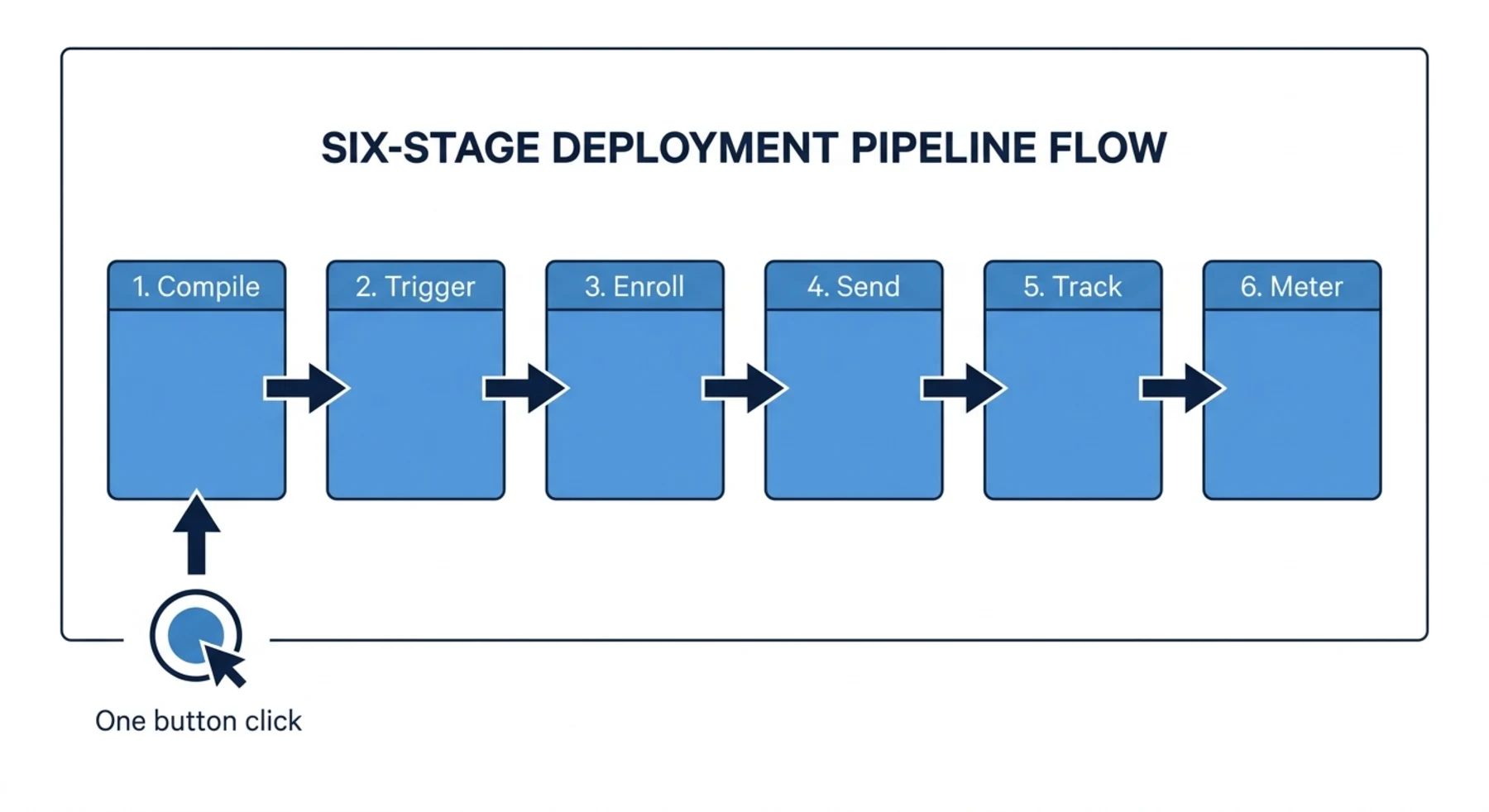
Engineering deep dive by CTO Greg Lee on how Campaign Engine is architected: provider-waterfall enrichment, two-phase propensity scoring, canonical identity resolution, first-party activity tracking, cost-metered AI orchestration, deliverability infrastructure, and per-org queue isolation, the systems behind the single-button-click campaign send.

Greg LeeJul 16, 202613 min read

RevOpsCRM data qualityAI agents & automation

Why Context Graphs Are Becoming the New Standard for Customer Data

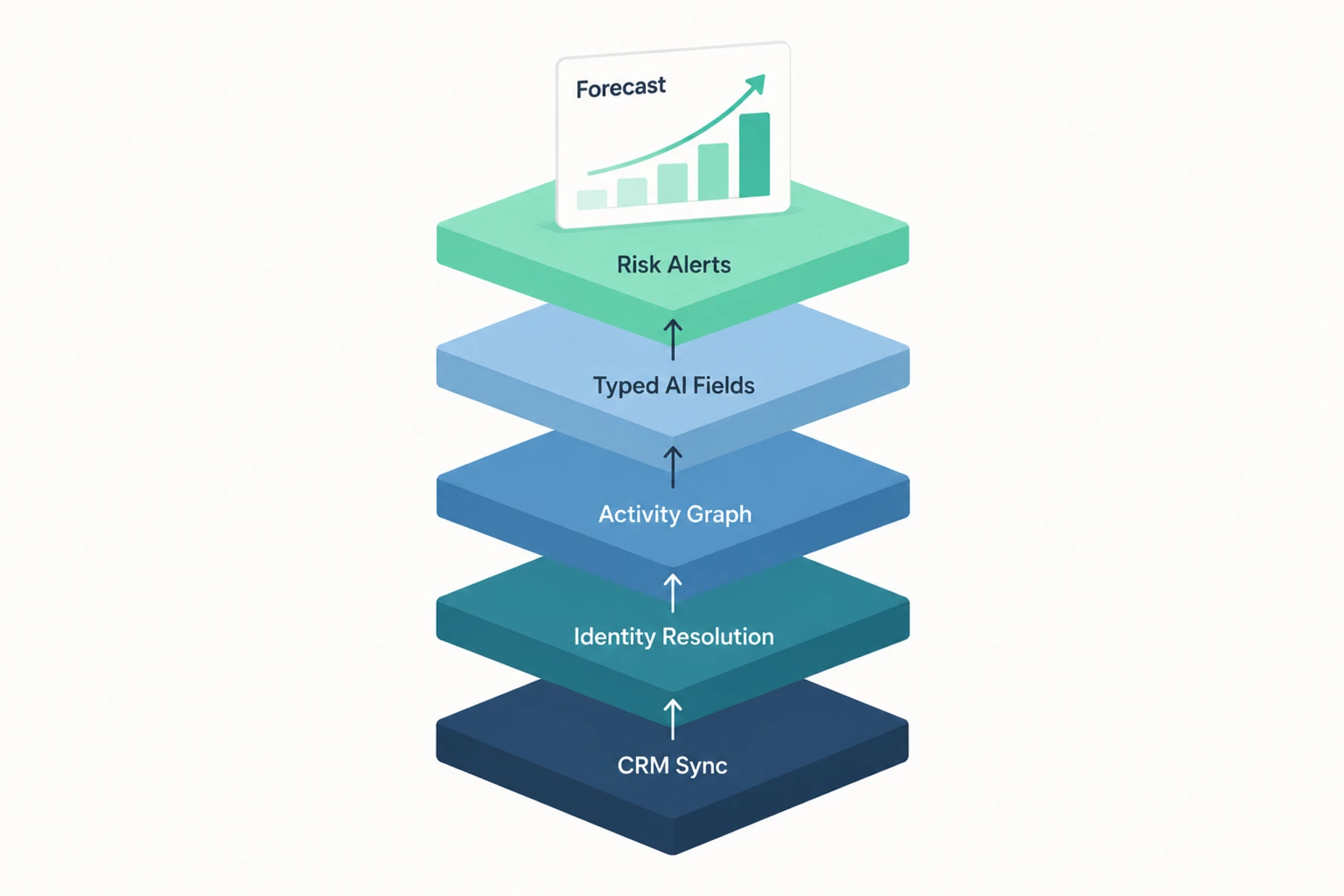
The CRM statistics tell a familiar story. Seventy percent of organizations now run customer relationship management systems, yet seventy percent also fail to integrate their sales processes with the technology they have purchased. Adoption exists. Integration lags. I have spent the last eighteen months working with enterprise teams trying to extract value from customer data systems designed for a different era. The pattern repeats across industries. Companies accumulate customer touchpoints across multiple systems, then struggle to assemble a coherent view of who they serve and how relationships develop over time. The traditional approach treats customer data as records in databases. The emerging approach treats it as connections in a graph. This shift toward what vendors call Common Customer Data Models, often referred to as context graphs, represents more than incremental improvement. It changes how organizations think about customer information, from storage to relationships, from snapshots to continuous context. The Structural Problem With Record-Based Systems Most customer data architectures organize information around transactions or interactions. A customer makes a purchase, opens a support ticket, downloads content, or attends an event. Each action creates a record stored in the system responsible for that function. Sales teams work with CRM records. Marketing teams work with campaign data. Support teams work with ticket histories. The challenge appears when teams need to understand customer behavior across these boundaries. A customer journey spans multiple touchpoints, but traditional systems store each touchpoint in isolation. Sales representatives see opportunity progression but miss content engagement that signals buying intent. Marketing teams track campaign responses without visibility into support issues affecting satisfaction. Support teams resolve tickets without context about the broader relationship. Integration attempts usually extract data from multiple systems and combine it in data warehouses or business intelligence tools. This approach supports historical reporting but breaks down for real-time decision making. By the time data moves through extraction, transformation, and loading processes, the interaction requiring context has already ended. The issue is architectural. Record-based systems optimize for storage and retrieval within functional boundaries. They were never designed to represent the web of relationships that define customer experience in complex organizations. How Context Graphs Change the Foundation A context graph structures customer data around relationships rather than records. Instead of storing isolated transactions, the system maps connections between entities. Customers connect to products. Products connect to support issues. Support issues connect to resolution patterns. Resolution patterns connect to satisfaction scores. Satisfaction scores connect to renewal probability. This structure enables outcomes traditional systems struggle to deliver. When a sales representative prepares for a call, the context graph can surface opportunity details alongside recent support interactions, content engagement, and behavioral signals from other teams. The system does not reconcile multiple databases at query time. The relationships already exist in the data model. Technical implementations vary, but the core concept holds. Customer entities maintain persistent identities that accumulate context over time. Each interaction adds relationship data rather than creating another isolated record. Teams access customer information through the same underlying graph, which delivers consistent, real-time context across functions. Graph databases model relationships as first-class objects rather than foreign key references. Relationship queries execute faster and more naturally. When a marketing team wants to identify customers who engaged with specific content and later opened support tickets, the graph traverses those connections directly instead of joining multiple tables. Implementation Realities and Constraints The technical advantages of context graphs surface quickly during proofs of concept. Organizational challenges emerge later and prove harder to resolve. Data quality issues multiply. Traditional databases tolerate inconsistent or incomplete records because systems operate independently. Context graphs depend on accurate entity resolution across all sources. When the system cannot reliably determine that records refer to the same person or organization, relationship mapping degrades. Most enterprises discover more data quality problems than expected. Email addresses change. Company names evolve. Contact details decay. Systems capture identifiers inconsistently. These problems existed before. Context graphs expose them immediately because relationship accuracy depends on entity accuracy. Integration complexity increases. Traditional integration moves records between systems. Graph integration requires semantic understanding of how entities relate. A customer in a CRM system may correspond to an account in billing and a user in support. The graph needs consistent mapping rules to represent those relationships accurately. Change management becomes more demanding. Context graphs reshape how teams interact with customer data. Sales updates influence marketing automation and support prioritization. Marketing activity creates context for sales conversations. Support documentation affects renewal risk and expansion strategy. The Productivity Question The business case for context graphs focuses on productivity and customer experience. Research supports these claims with measurable outcomes. Organizations using integrated customer data systems report twenty-one percent higher sales productivity and seventeen percent better lead conversion rates. The mechanism is simple. Better context enables better decisions. Sales teams prioritize based on engagement signals. Support teams resolve issues faster with full history. Marketing teams deliver relevance by understanding the complete journey. Measurement remains difficult. Productivity gains rarely isolate cleanly from market conditions, product changes, or staffing shifts. I have seen companies credit revenue growth to context graph deployments when product launches drove results. I have also seen organizations dismiss real gains because they expected immediate transformation. The most reliable measurements focus on specific use cases. Time saved on data gathering. Accuracy in customer communication. Faster issue resolution. These improvements compound across teams but require disciplined measurement to demonstrate value. The Standard Formation Process Context graphs are becoming standard through necessity. Customer expectations for consistent, personalized experiences across touchpoints exceed what traditional architectures support. Adoption follows a familiar pattern. Early adopters solve specific integration problems. Results circulate through case studies and conferences. Vendors add graph capabilities. Analysts recommend graph-based approaches. Late adopters implement to maintain parity. The market now sits in the middle of this cycle. Major CRM and marketing platforms include graph features. Specialized vendors gain traction. Industry reports position context graphs as emerging best practice. Standardization accelerates as organizations realize customer data integration functions as an ongoing operational requirement. Traditional integrations demand continuous maintenance as systems evolve. Context graphs provide a more durable foundation for complex environments. Looking Forward The context graph approach addresses real limitations in current customer data architectures. Productivity gains appear when implementations remain focused and disciplined. The technical foundation supports customer experience requirements that legacy systems struggle to meet efficiently. The transition takes longer and costs more than vendors suggest. Data quality remediation, integration complexity, and change management extend well beyond initial deployment. Organizations considering context graphs should anchor efforts to concrete use cases with measurable outcomes. The technology delivers the most value when customer interactions span multiple systems and teams. The shift toward context graphs reflects a broader competitive reality. As expectations rise, the ability to deliver consistent, personalized interactions across every touchpoint determines outcomes more than the specific tools that enable them.

Greg LeeJan 20, 20265 min read