

I sat in a new business meeting some years ago where the sales rep opened with what he thought was an easy question. "So, how did you hear about us?"
The prospect looked at him and said, "What? You called me."
The meeting never really recovered.
He was right to be annoyed. He had followed our LinkedIn page. He had downloaded our whitepapers and read our case studies. He booked the meeting himself after our SDR reached out. Every one of those actions was sitting in our systems, spread across three separate copies of his Lead record, with no Contact record tying any of it together. The rep walked in blind and then asked a question that told the buyer we had not been paying attention.
One rep, one meeting, one bad opening question. The same blind spot runs in every other direction, and it costs a great deal more than an awkward first five minutes.
TL;DR: Fragmented customer data is usually treated as a database hygiene problem. It is a decision problem. When sales, marketing, customer success, product, and leadership each hold a different version of the same account, they make different decisions about it, and the disagreement shows up in five places you already measure: pipeline, conversion rate, average deal size, time to close, and churn. A single source of truth is a governance model for deciding which customer information is authoritative, not one perfect database.
A different customer record produces a different revenue decision
If your teams cannot agree on what already happened with an account, they will not agree on what should happen next.
A different customer record produces a different revenue decision because every commercial judgment is made against whatever history the person making it can see. A shared customer view is a governed record of who the customer is, what they have done, who is involved, what has been promised, and where the commercial relationship stands. When that view splinters, so does the decision-making built on top of it.
This is not the same problem as an empty CRM field. Missing data is visible. People know to go looking. Conflicting data is worse, because each team has something that looks complete and acts on it with confidence. The rep in that meeting was not short of information. The company had all of it. He simply could not see it, and nothing in his workflow told him it existed.
That distinction matters because the two problems have different fixes. Incomplete records are a collection problem. Conflicting records are a governance problem.
Fragmented customer context leaks revenue through five levers you already measure
You do not need an industry benchmark to find this cost. You need to know which five numbers to look at.
Fragmented customer context leaks revenue through five levers, and every one of them is something you already report on. That is the useful part. You can go and look. The meeting I opened with is a small version of the second one.
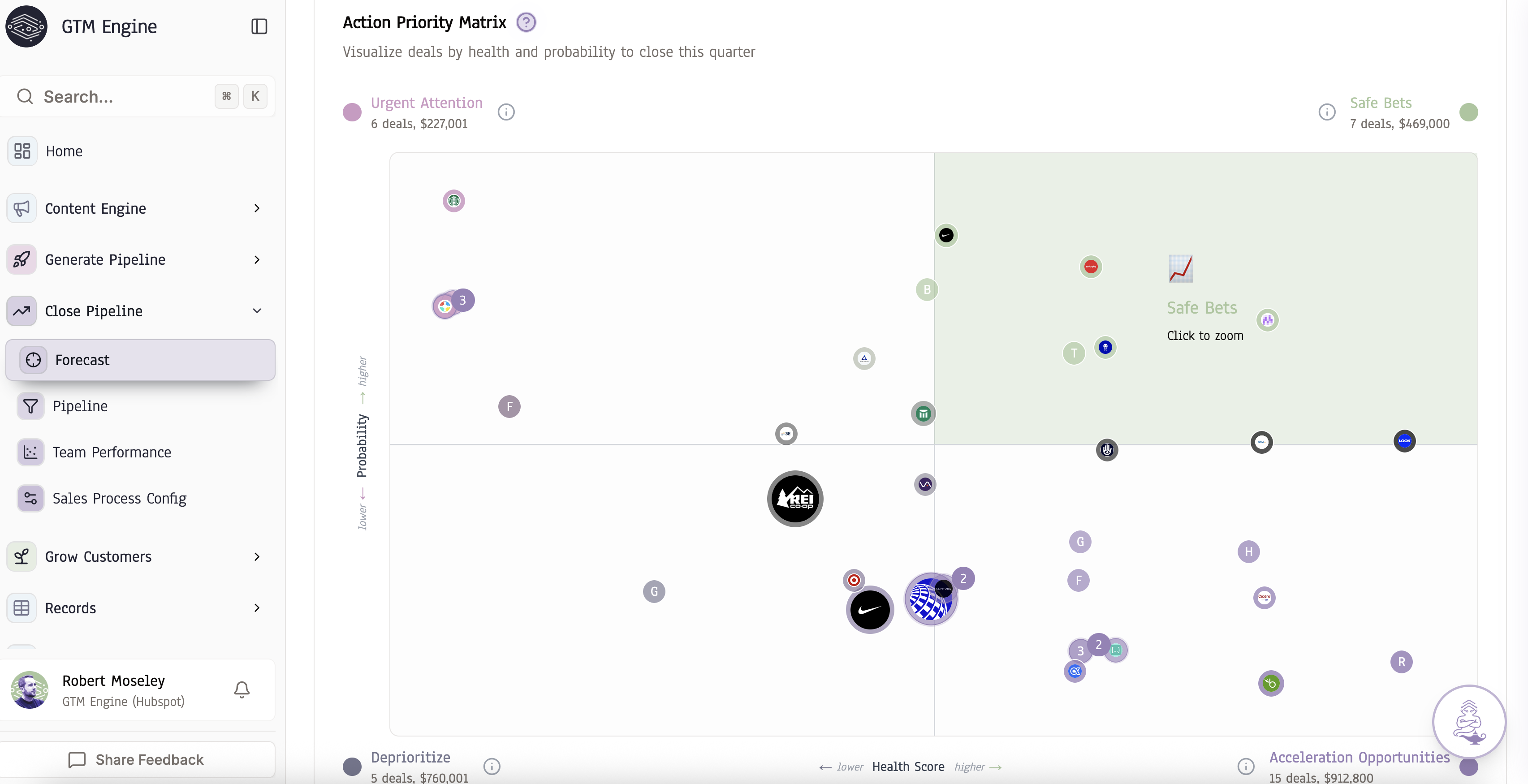
Lost pipeline. The upsell signal a champion drops on a call is never flagged internally, and contacts who are quietly exploring never get resurfaced for a re-engagement campaign. Look for opportunities created almost entirely from forms or slack messages rather than from things customers said, and inspect pipeline created by source alongside how much expansion pipeline originates from existing accounts.
Conversion rate. Reps enter deals without the buying process, what the pain is worth solving, or the full committee that has to agree. Look for single-threaded opportunities with no documented decision process, and inspect win rate against contacts meaningfully engaged per closed-won opportunity.
Average deal size. Nobody assembled the full picture of value against the gap between the customer's current state and the one they want, so discounts do the work instead. Look for discount approvals concentrated in the final days of the cycle, and inspect average contract value and discount rate by stage.
Time to close. No standing next step, and procurement, legal, security review, and executive sign-off lead times get discovered rather than planned. Look for open opportunities with no scheduled next meeting and repeatedly slipped close dates, then inspect cycle time, stage age, and slipped-deal rate.
Churn avoidance. Internal and external signals that predict a non-renewal exist well before the renewal date, and nobody sees them while there is still time to act. Look for renewal risk surfacing for the first time in the renewal conversation itself, and inspect gross retention against elapsed time from first risk signal to intervention.
Handoffs deserve separate attention, because misses concentrate there. The structural fix is to stop having handoffs at all. When marketing interactions, SDR activity, sales conversations, and customer success notes track against the same Contact and Account, marketing to sales, sales to CS, and CS back to marketing for a case study or an upsell all stop being transfers of custody and become continuations of one record.
Latency belongs in the same accounting. One prospect evaluating this problem described the gap between a customer call ending and anyone actually reading the notes: interruptions and back-to-back meetings could push the review to the end of the day or the following day. That is a single account's experience rather than a measured pattern, but it points at something real. Context that arrives after the next decision has been made is not context. It is a record.
Data silos begin in workflows and then harden into separate platforms
Every team that went and solved its own problem made the company's problem worse.
Data silos begin in workflows and then harden into separate platforms. Three copies of one Lead record was not a storage failure. The storage worked exactly as designed. What failed was everything around it: the forms that created new records instead of matching existing ones, the absence of a rule about which object owned the relationship, and a workflow that never put the buyer's history in front of the rep before he walked into the room.
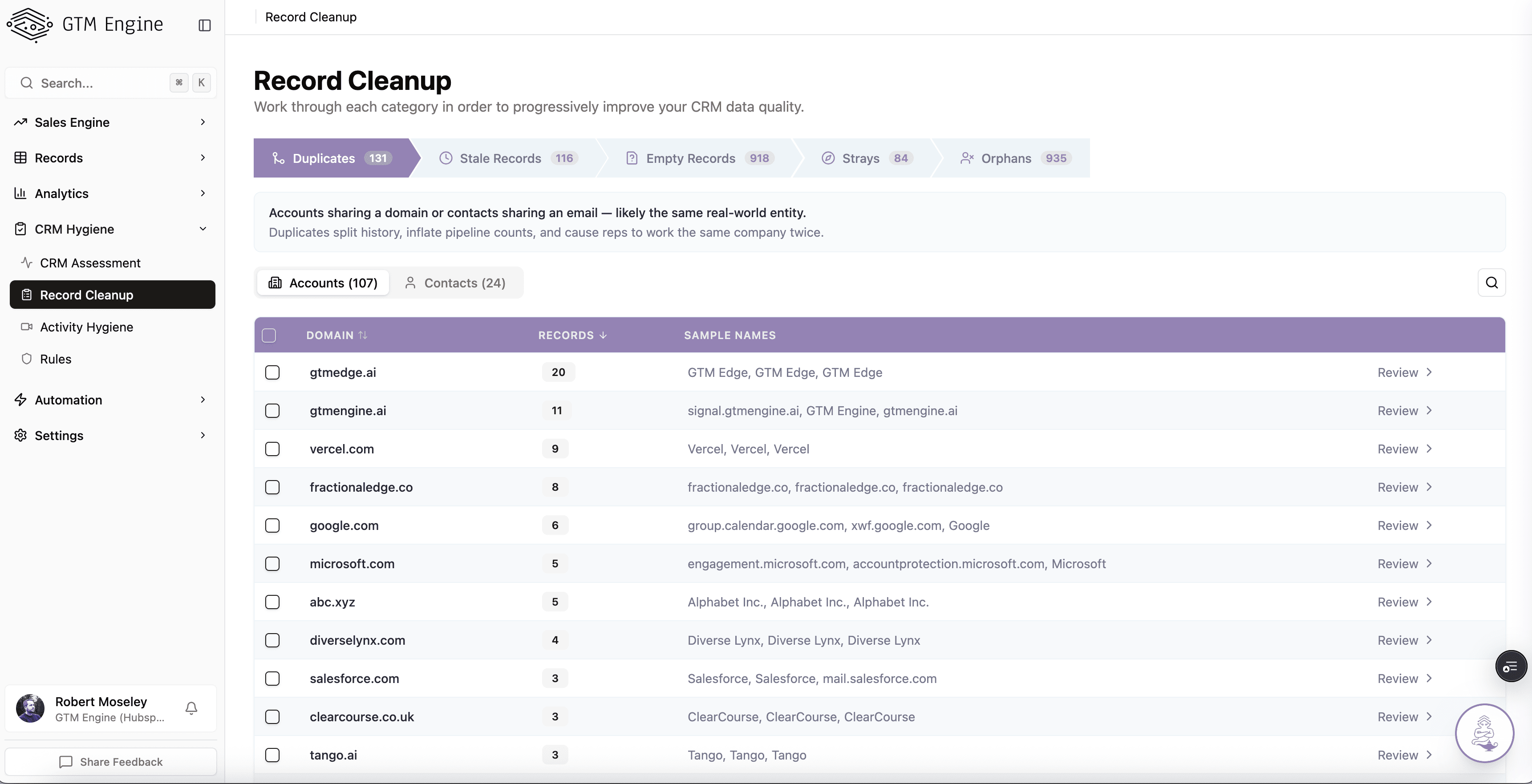
Workflow is only where this starts. The fragmentation becomes structural when each team stops waiting and solves its own problem. Customer success decides Salesforce does not fit the way they work and adopts Gainsight. Calls get recorded and analyzed in Gong. Support conversations move into Zendesk or Intercom. Marketing runs its own automation. Every one of those decisions was locally rational, and most were correct for the team that made them.
Each of those tools is built around its own job, and built well for it. Gong is designed for conversation intelligence. Gainsight is designed for customer success workflows. Zendesk and Intercom are designed for support. Salesforce and HubSpot are designed to be the operational record and the reporting layer over it. None of them was designed to be the shared view of the customer that every other team works from, and none becomes that simply by being integrated.
Collectively they put customer data in four or five platforms with different data models and different definitions of an account, connected by integrations that move fields on a schedule rather than carrying context. Sales history lives in one system and customer history in another. What a customer said on a call lives somewhere else again, structured for the team that recorded it rather than for anyone downstream.
It happens at smaller scale too. One prospect described pulling call recordings from two separate tools and expecting to handle some of it manually. That is one account's environment rather than a measured pattern, but two tools is all it takes to start losing track of what a customer said.
The root cause was workflow. The point of no return came when every team optimized its own workflow and nobody looked at the whole.
A single source of truth is a governed operating model, not one perfect database
The goal is not one database. It is one answer to the question "what do we know about this account?"
A single source of truth is an agreed system and governance process for resolving which customer information is authoritative for a given revenue decision. That definition does more work than it appears to. It means the source of truth can draw on several systems while still presenting one governed view, and it means the deciding factor is the agreement rather than the storage location.
This is why consolidating storage does not fix fragmentation on its own. The harder disagreement is about meaning. Two teams can read the same record and still disagree, if one defines an account as active from first contract signature and the other from first successful onboarding. Integration moves data. It does not create agreement.
It is also the honest answer to "don't we already have a CRM for this?" A CRM is the operational record for accounts, contacts, opportunities, and revenue activity. A customer data platform is a system for unifying customer data from multiple sources into profiles for segmentation and activation, though the exact scope varies by product. Neither category guarantees that your teams share definitions, that interaction context is complete, or that anyone uses the result in the workflow where the decision gets made.
In practice a governed view requires a shared definition of the customer, named authoritative sources for the fields that matter, identity resolution so records match, rules for how updates happen, and a clear owner when something is disputed.
The test is whether context reaches the decision. A prospect evaluating this asked it more plainly than I would have: how does that information go back into the CRM, and how can it be captured into subsequent actions? That is the right question. An insight from a conversation has to become structured context, update the right record, and then cause something to happen, or it has changed nothing.
The fix is shared customer context, not another point solution
If you are tired of applying bandaids, the next tool is not the answer either.
The fix is shared customer context, not another point solution. If your go-to-market teams are siloed, each working in their own system against their own version of the customer, adding one more platform to that stack deepens the fragmentation instead of closing it. Every tool you already own solved a real problem for the team that bought it. None of them fixed the thing underneath.
Fixing it at the source looks different. It means one agreed definition of the customer, interactions from marketing, sales, and customer success landing against the same account and contact, and context arriving in the workflow where the decision actually gets made. It does not mean replacing the systems your teams already run on. One prospect described what they wanted as an overlay rather than a rip and replace, which is a better way of putting it than anything on our website.
If you are running four platforms with five definitions of an account, and a rep can still walk into a meeting without knowing the buyer booked it himself, the missing piece is not a feature. It is one account of what happened that every team can see, and that keeps itself current when a customer says something new. That is the problem we decided to work on.
Frequently asked questions
What are the consequences of poor customer data quality?
Poor data quality produces rework, delayed follow-up, inconsistent targeting, broken handoffs, unreliable pipeline inspection, and decisions made from incomplete or conflicting customer context.
How much does poor customer data quality cost?
There is no credible universal figure, and the widely circulated industry numbers are rarely traceable to a method you can audit. The cost is specific to your company, and it is calculable: reconciliation labor, delayed action, wasted targeting, failed handoffs, forecast rework, and documented opportunity leakage.
How do I calculate the cost of poor data quality?
Cost of poor quality is the resources spent preventing, detecting, and correcting bad information, plus the commercial effects you absorb because of it. Pick one workflow and one measurement period, document your inputs, baseline it, change one thing, then compare. State your assumptions rather than burying them.
What are the disadvantages of data silos?
Data silos separate customer context by team or system. People reconcile records by hand, and revenue decisions get made from stale or conflicting information.
What are examples of data silos in a revenue team?
Conversation intelligence holding what the customer said, a customer success platform holding account health, a support tool holding the complaint history, marketing automation holding engagement, and the CRM holding the opportunity. Each is authoritative for its own job and none holds the whole picture. Duplicate records inside a single system are a silo too: three copies of one buyer's Lead record split that buyer's history three ways.
What are Salesforce hygiene best practices?
Salesforce hygiene best practices are the controls that stop duplicate and conflicting records from being created, rather than the cleanup projects that follow. The working set is matching and duplicate rules that fire at the point of creation including on form submissions, one documented rule for whether the Lead or the Contact owns the relationship, validation on the fields that drive routing and reporting, a named owner for each field teams dispute, and a standing dedupe and merge cadence instead of an annual purge. The same practices apply in HubSpot. Track duplicate rate and conflict rate so you can tell whether the controls are working.
How do I create a single source of truth for customer data?
Agree on customer definitions, assign authoritative sources and owners, connect the relevant events, set update and exception rules, and then check whether downstream teams actually use the governed view.
What is an example of a single source of truth?
A governed account view combining identity, opportunity status, stakeholder roles, recent interactions, commitments, and next actions, with links preserved back to the authoritative source systems.
What is the difference between a CRM and a CDP?
A CRM is the operational record for accounts, contacts, opportunities, and revenue activity. A customer data platform is a system for unifying customer data from multiple sources into profiles for segmentation and activation, though the exact scope varies by product. Neither category guarantees that your teams share definitions, that interaction context is complete, or that anyone uses the result where the decision gets made.
Who is responsible for customer data quality?
Revenue operations owns the definitions, the authoritative sources, and the controls. The teams working the records own correcting context at the point of use. Disputes need a single named executive owner, because unresolved definition arguments are what turn a data problem into a permanent one.
What should be done when customer records conflict?
Pause the automation running off the disputed field, establish which source is authoritative and who owns it, correct the record, then write down the resolution rule so the same argument does not recur. Inspect the workflows that consumed the bad value before you close it out.
About the Author

Robert Moseley IV is the Founder and CEO of GTM Engine, a pipeline execution platform that’s changing the way modern revenue teams work. With a background in sales leadership, product strategy, and data architecture, he’s spent more than 10 years helping fast-growing companies move away from manual processes and adopt smarter, scalable systems. At GTM Engine, Robert is building what he calls the go-to-market nervous system. It tracks every interaction, uses AI to enrich CRM data, and gives teams the real-time visibility they need to stay on track. His true north is simple. To take the guesswork out of sales and help revenue teams make decisions based on facts, not gut feel.


